5 Ways to Walk a Monday Mile Indoors

When the weather is sunny and delightful, taking a stroll through the neighborhood or exploring your local park is a terrific way to get your daily dose of physical activity. But gloomy storm clouds and frost-covered sidewalks can often discourage us from venturing outside.

On these frightful days, it’s best to take your Monday Mile walk indoors.

…But how?

Even if you can’t get to indoor facilities like gyms and shopping centers, there are still many ways to get in your weekly steps from the comfort of your own home. This Monday, get in your Monday Mile without stepping outdoors.

Stairs

Walking up and down the stairs is a surprisingly effective form of aerobic exercise. It burns more calories than jogging, and can also increase muscle strength, improve endurance, and preserve bone density. Although you may not go the same “distance” as if you were on a treadmill or track, you will still get in a tremendous workout.

Hallways

Fitting in fitness can be fun, especially if you’re stuck in the house all day. Put on some headphones and walk around the house listening to an energizing soundtrack. If you have a step counter or another wearable fitness device—even better! You can challenge yourself to beat your last week’s step total. Use breaks in the work day to take a few laps around the house or apartment. It will benefit your body as well as your state of mind.

Supermarkets

We’re not advocating that you use your local supermarket as a gymnasium, but if you have the opportunity to go grocery shopping during off-hours, you can actually manage to get a pretty good workout strolling up and down the many aisles. Pushing a cart around the perimeter of the store is a fun (and delicious) way to get in extra steps during the week.

Treadmill

This one is pretty obvious, but if you have a treadmill, you can easily walk at any time of day. Set it up in front of your television and turn on one of your favorite shows. Next thing you know, you’ll have effortlessly walked a couple miles by the time the episode is over.

Living Room

How can you walk a mile in your living room? Easy, just walk-in-place. Sure, it might sound silly, but walking in place is actually a great source of aerobic exercise that you can do during down time or commercial breaks. In a study published by the Medicine & Science in Sport & Exercise journal, participants who walked in place for an hour burned an average of 258 calories, compared to roughly 304 calories for people who walked on a treadmill.

Walking is one of the simplest ways to get more exercise for people of any fitness level and age. It’s good for your heart, bones, muscles, weight, and your mood. This Monday, don’t let anything stop you, not even the weather.

All of Your Scariest Fitness Fears Dispelled

Regardless of age or ability level, sometimes it’s just hard to find the energy, motivation, or confidence to get back into a workout routine. Whether you fear getting injured or are just reluctant to get back into the gym, it’s important to remember that a little anxiety about recommitting to exercise is perfectly normal.

This Monday, take a moment to consider the thoughts that are holding you back. By identifying our own barriers, we are better equipped to break them down.

Check out our list of common fitness fears, and start overcoming them.

Little/No Time

Our schedules are pretty tight, but there’s always some time to fit in some fitness. If you’re stuck helping with homework or cleaning up after dinner, use this time as an opportunity to perform some quick-and-easy kitchen workouts, like counter pushups or stove squats. You can also find more creative ways to fit in fitness, like parking farther away from store entrances or taking an additional walk up and down your staircase.

Intimidation

Getting back into exercise can be a lot to handle. Build up your confidence and squash feelings of self-doubt by repeating a few positive affirmations throughout the day. These words of inspiration provide the extra courage and focus you need to take your first (and second) step towards exercise.

Lack of Support

You don’t need to be working out next to someone to be part of a fitness community. Create your own virtual workout group by connecting online with friends, colleagues, or distant cousins. You can send each other sweaty selfies or other (maybe more flattering?) evidence of your progress. If you’ve got a full household, get everyone involved in your workout by practicing some easy family yoga poses.

Low Energy

A lot of factors contribute to your energy levels, but a restful sleep can really make a big difference. Try getting some extra shut-eye, and make sure to schedule your physical activity for times you feel the most awake and energized.

Missing Motivation

Sometimes, even the assurance of better health is not a strong enough motivator. To solidify the commitment, try scheduling a specific time to work out, and write it down on a calendar, weekly planner, or in a fitness journal.  If your workouts are getting a bit drab or monotonous, mix up your exercise routine to infuse it with a some more fun.

Fear of Injury

An important way to avoid injury and stay physically active is to understand your fitness level and know your health numbers. A quick self-assessment can help you identify which parts of your body are strong and healthy, and which may require some extra attention. Before doing any strenuous movements, make sure that you warmup beforehand and learn the proper form. Engaging in some simple stretching at the beginning of a workout can also reduce the risk of a strained muscle by improving your flexibility, coordination, and balance.

Lack of Skill

You don’t need to be a fitness junky to get in a decent workout. Any regular physical activity—walking upstairs, jogging around the block, carrying groceries—can be converted into a form of exercise. Try finding ways to fit in fitness; you’ll be surprised at how quickly those steps add up. Even an activity as innocuous as gardening can be a useful form of physical activity.

Cost

Want to work out for free? Easy. You don’t need any expensive gym membership or equipment to exercise. Walking, dancing, home workouts, and free online fitness classes and tutorials are all no-cost exercise options that can spice-up your fitness routine without busting your bank account.

Poor Weather Conditions

It’s too wet; it’s too cold; it’s too hot—these thoughts always cross our minds when the weather isn’t ideal. But on these less than perfect days, consider taking your workout or Monday mile indoors. Getting a modest workout even on days when you don’t feel like will help you stay consistent and on track.

Walk to a Park Day: Celebrating Decatur’s 10-Minute Neighborhood

In Decatur, we believe that parks are vital community spaces, and ensuring accessibility to these green havens is at the heart of our planning. This year, we’re proud to celebrate Walk to a Park Day on October 10th, a day that recognizes the importance of access to parks and promotes walking as a key component of a healthy, sustainable lifestyle.

Mayor Patti Garrett officially proclaimed October 10th as Walk to a Park Day at the October 7th City Commissioners Meeting, where Decatur Parks and Recreation staff were present to witness this exciting moment.

What is a 10-Minute Neighborhood?

Decatur’s 2020 Strategic Plan, Destination 2030, includes a bold vision: the “10-minute neighborhood” (MB.02). This concept focuses on ensuring that people of all abilities can safely access local amenities and activity nodes—like parks, shops, and services—within a 10-minute walk or bike ride, without needing a car. In a 10-minute neighborhood, most daily needs, including groceries, restaurants, playgrounds, and libraries, are all easily reachable.

How Does Decatur Measure Up?

Decatur is proud to be a city where 97% of our residents and employees live within walking distance of a park, far exceeding the national average of 54%. With over 60 miles of sidewalks and charming tree-lined streets, Decatur makes it easy to get outside, get active, and enjoy the natural beauty around us.

As we mark Walk to a Park Day, it’s a perfect opportunity to reflect on how the 10-minute neighborhood concept plays a crucial role in our city’s design. By encouraging walking and biking to parks and other community spaces, we’re reducing our carbon footprint, fostering health and well-being, and building connections with our neighbors.

Why Walk to a Park?

Beyond the obvious physical health benefits, walking to a park promotes mental well-being, supports environmental sustainability, and enhances social interactions. Parks are where we come together as a community, whether it’s for a morning stroll, a weekend picnic, or an afternoon at the playground.

This October 10th, celebrate Walk to a Park Day with your friends and family by taking a leisurely walk to one of Decatur’s beautiful parks. Let’s continue to embrace the 10-minute neighborhood and enjoy the walkable, accessible, and vibrant community that we all contribute to.

Get involved. Get outside. And let’s keep Decatur moving!

Here’s Why Warmups and Cooldowns Need to be Part of Your Workout Routine

Warming up and cooling down are two important components of every fitness routine, but how can you use them to improve the quality of your workout?

Benefits of a Warmup

Although there’s no strict definition for what constitutes a “warmup,” the basic idea is doing an activity or exercise at a slower pace to help prepare the body for more intense aerobic workout.

A warmup gradually engages your cardiovascular system, which raises your body temperature and increases blood flow to the muscles. This improves the elasticity (the stretchiness of muscle tissue) and can help reduce muscle tightness, pain, and risk of injury.

A warmup can also be an exercise in itself. Stretching during or immediately after your warmup can improve your flexibility in both the long and short term. Just remember to stretch after you’ve done a short aerobic exercise to get the blood flowing to your muscles.

Properly warming up before a workout can also benefit your mental state. If you start your fitness routine with heavy weights or a strenuous aerobic fitness routine, you’re more likely to be discouraged. Starting slowly and easing yourself into your exercises gradually prepares you for a full and effective workout.

Benefits of a Cooldown

After you finishing a workout, a 10-minute cooldown allows body temperature, heart rate, and blood pressure to return to their normal levels. Stopping an intense exercise abruptly without a cool down can possibly lead to dizziness or even fainting.

Cooldown exercises, like stretching, walking, foam rolling, and deep breathing, can help lower your risk of injury and reduce stress to the heart and other muscles.

If you’re looking to incorporate more stretching into your workout routine, try starting with some beginner yoga poses. Stretching helps improve your flexibility as well as range of motion around the joints, while also benefitting balance and bone health.

This Monday, take a few extra minutes before and after your workout to fit in a warmup and cooldown.

First Things First: Talk to a Doc and Know Your Health Numbers

Are you physically healthy? — Seems like a simple question, right? But if you’re like most people, you might have trouble coming up with an answer.

That’s because health is a tricky thing to quantify.

Now that you’ve decided to incorporate more physical activity or exercise into your daily routine, it’s important to have a foundational understanding of your physical wellbeing. And there’s no easier way to do that than by talking to your doctor and getting to know your “core numbers.”

By knowing these measurements, you’ll be able to approach physical activity with a renewed sense of confidence and safety. And your numbers can serve as the baseline from which you can measure and track your progress.

Research shows that Americans say they are most likely to call to schedule a doctor’s appointment on Monday (40%) than any other day of the week (Tuesday is next at 9% and 30% have no preference for the day of the week).

So, this Monday, make an appointment to meet with your doctor and make sure you leave knowing these core four measurements of health:

Body Mass Index (BMI)

BMI is a widely used formula to measure body fat, and although the calculation has its flaws, most notably its inability to account for factors like bone density and muscle mass, it is still useful in gauging whether you are overweight. BMI is a simple calculation that uses your weight and height. Although you can figure this number out yourself, it’s best to go discuss the details of your BMI with your doctor or physician.

Blood Pressure (BP)

A blood pressure reading measures the force of your blood pushing against the walls of your blood vessels. Having high blood pressure is often the precursor to heart attack, loss of visions, heart failure, or stroke, which makes knowing and understanding these numbers critical. Blood pressure can fall into five different categories of severity, so it’s best to discuss your blood pressure results thoroughly with your doctor to understand the most appropriate course of action.

Cholesterol

As one of the most discussed indicators of health, your cholesterol is an important number to know. Having high LDL (bad) cholesterol and low HDL (good) cholesterol can lead to the formatting of plaque around the arteries, leading to heart attack, stroke, and a myriad of other health risks.

Blood Sugar

Maybe the most important number to know, high blood sugar indicates that your body doesn’t make insulin or properly use it. Over time, this condition can damage the blood vessels, nerves, and organs. Ask your doctor to check your fasting glucose level or hemoglobin A1C as part of a routine blood test.

Find the Perfect Push-Up for You

The push-up is a fast and effective exercise that engages the chest, triceps, biceps, shoulders, back, and core. Executing the standard push-up requires a certain amount of base strength and flexibility, but there are numerous variations available to individuals of all ages and fitness levels.

Starting with a modified version of the push-up, such as the wall push-up or kneeling push-up, reduces risk of injury and establishes a clear path of progression. As you get more comfortable with the push-up motion, you can make adjustments to the form that will target different muscle groups and make the exercise more challenging. For example, placing your hands close together will target your biceps and triceps, while placing them far apart puts more strain on the chest and pectorals.

As you add more sets and variations to your weekly push-up routine, you’ll notice more toned and tighter muscles. Start your push-up journey this Monday, and experience firsthand the benefits of push-up progression.

Beginner: Wall Push-up

Wall push-ups focus on the shoulders and chest, without putting too much strain on your joints and back. To do a standard wall push-up:

  1. Start with your legs and feet together, standing about 2 feet away from the wall (the farther your feet, the harder the movement). Extend your arms straight out so that you palms rest flat on the wall at a shoulder-height with fingers pointed upwards. Your hands should be shoulder-width apart.
  2. Bend at the elbows and slowly lower your body towards the wall till your nose is a few inches away. Do your best to make sure your back and hips stay straight and aligned.
  3. Push back to starting position and repeat. Aim for 3-4 sets of 15 reps.

Intermediate: Kneeling Push-up

The kneeling push-up targets the chest and upper arms like the top of the shoulders (deltoids) and the triceps. By having your knees on the ground, you aren’t pushing up your full weight, which makes this exercise a good precursor to the standard push-up. To do a kneeling push-up:

  1. Get on your knees and place your hands on the floor shoulder-width apart. Tighten your core, and make sure your legs and knees form a straight line.
  2. Bend your elbows until your chest is a couple inches off of the floor.
  3. Pause for a second, return to starting position, and repeat. Aim for 3-4 sets of 20 reps.

Advanced: Classic Push-up

Why is the classic push-up considered advanced? Because, with proper form, doing a classic push-up correctly hits nearly every muscle from the waist up. To do the classic push-up:

  1. Start in a plank position: both hands on the floor shoulder-width apart, arms locked at the elbow, back straight and aligned with hips, and feet shoulder-width apart. Basically, try to think of the body as one giant line.
  2. Your chest/nipple should be directly over your thumb nail. Fingers should be splayed, and hands should be in a comfortable position on the floor.
  3. Inhale as you slowly lower your chest down to the floor, and exhale as you push the palms of your hands into the floor, bringing your torso, thighs, and chest off the ground.
  4. Return to starting plank position and pause a second before the next repetition. Aim for 3-4 sets of 15 reps.

Expert: Alligator Push-up

This version of the standard push-up requires a significant amount of core and arm strength. The alligator push-up (AKA croc crawl) differs from the standard push-up by targeting your core and shoulders, but it’s really a whole-body exercise. To do the alligator push-up:

  1. Start in a push-up position with arms and legs shoulder-width apart.
  2. Lower yourself until your chest and torso are as low as to the floor as they would be when doing a normal push-up. Brace your core and glutes to keep your posture flat and stable.
  3. Begin the exercise by bringing one knee up towards the elbow, while moving the opposite arm forward (the motion should feel like you’re crawling). Then repeat on the other side. Aim for 3-4 sets of 10-15 reps.

Exploring Decatur’s Beacon Hill and the Praise House Project: Preserving African American Heritage

Decatur, Georgia, has a rich African American history that has often been overshadowed by systemic inequities and urban development. The Praise House Project is a community-based initiative that seeks to preserve and uplift these vital histories through immersive public art installations. Located at 346 West Trinity Place, the current Praise House invites visitors to step into a multimedia experience that honors the African American narratives of the area.

The Praise House Project: Standing on Hallowed Ground

Created by Charmaine Minniefield, the Praise House Project places small wooden structures with fully immersive digital projection installations within communities. These installations recreate the traditional Ring Shout—a spiritual practice of enslaved Africans—using archives and footage collected from the local community. Each Praise House serves as a safe space for gathering, reflection, and honoring the African American history deeply rooted in the land.

The Praise House in Decatur will feature a special exterior illumination on August 30th from 8-10 pm, in collaboration with Decatur photographer Gregory White. On August 31st, from 5-8 pm, the interior of the Praise House will be open for special viewing during Decatur Day, offering a deeper engagement with this impactful art installation.

Beacon Hill: Forging Freedom in Downtown Decatur

Beacon Hill, once known as “the Bottom,” was a thriving African American community established by freed slaves after the Civil War. This square mile of Decatur became home to numerous Black-owned businesses, churches, and schools, creating a vibrant community despite facing significant challenges.

In the 1930s, the area began to be condemned by the city to make way for public housing, leading to the displacement of many families and businesses. However, the legacy of Beacon Hill remains strong. Prominent businesses such as Henry Oliver’s blacksmith shop, LC’s Rib Shack, and the Ritz Movie Theater are remembered for their contributions to the community’s fabric. The area’s churches, including the historic Antioch AME Church and Lilly Hill Baptist Church, continue to serve as pillars of strength and gathering places for the community.

Beacon Hill was also a center for education and youth activities. Despite limited resources, the community established schools like Herring Street School, which later became Beacon Elementary School and Trinity High School. These institutions not only provided education but also nurtured civic leaders and created opportunities for future generations.

Beacon Hill was more than just a place; it was a community where families connected, children played, and everyone gathered to celebrate life’s milestones. From the local Ritz Theatre to the bustling recreation center at Ebster Park, Beacon Hill was a neighborhood where African American culture and community thrived.

The Praise House Project and the history of Beacon Hill both serve as powerful reminders of Decatur’s rich African American heritage. As these stories are shared and preserved through art and community engagement, they continue to shape the identity and future of Decatur. Visit the Praise House and take a moment to reflect on the resilience, creativity, and strength of the Beacon Hill community—both past and present.

Outdoor Adventures with the City’s Urban Naturalist

Gather the whole family for an exciting outdoor adventure led by the City’s Urban Naturalist! These programs are perfect for nature enthusiasts of all ages, offering active exploration through hikes to ponds, wetlands, and more. Each month features a new theme, ensuring a fun and educational experience for everyone.

August Theme: Frogs

Discover the incredible world of frogs this August! The program will delve into the fascinating lifecycle of frogs and offer hands-on activities like catching tadpoles for a closer look. Participants will also have the chance to explore the water using waders for an even deeper adventure!

For All Ages:

  • Date: August 28
  • Time: 6:00-7:30 PM
  • Location: Decatur Legacy Park, Meet at Cochran Building (500 South Columbia Drive, Decatur, GA 30030)

For 1st-5th Graders:

  • Date: August 28
  • Time: 4:00-5:30 PM
  • Location: Decatur Legacy Park, Meet at Cochran Building (500 South Columbia Drive, Decatur, GA 30030)

Join us for an unforgettable outdoor adventure where you can explore nature, engage in hands-on learning, and create lasting memories. Don’t miss out on this chance to connect with nature and each other! Hikes are free but please register through CommunityPass.

Reward Yourself Every Monday for Sticking with Fitness

If you spent the past week keeping up with your fitness routine, then you’ve earned the right to celebrate this Monday! Sticking to a workout regimen is no easy task, especially when daily life is busy.

If you achieved any of your fitness goals, like losing weight or increasing the time you spent working out, there are ways to reward yourself that won’t sabotage your progress. Rewards are a great way to motivate you to keep pushing yourself toward next Monday’s reward.

Take a nap! You’ve worked hard, why not get some extra sleep? Sleep improves memory function, mental focus, and physical performance. By catching some extra z’s, you may have better workouts. That’s right, reward yourself with some downtime.

Treat yourself. A fitness routine can build up tension in your muscles, consider getting a massage or taking a bath with Epsom salts for tired muscles. Do something that makes you feel good, healthy, and relaxed.

Eat a good meal. Don’t overlook nourishing yourself as a reward. Cook up your favorite, healthy foods and make a great meal. Eating well can also improve your workouts.

Rewarding yourself is a way of thanking your body for all the hard work it does. Use Monday as a way of giving back to yourself, replenishing your reserves, and being grateful for all that you’ve achieved.

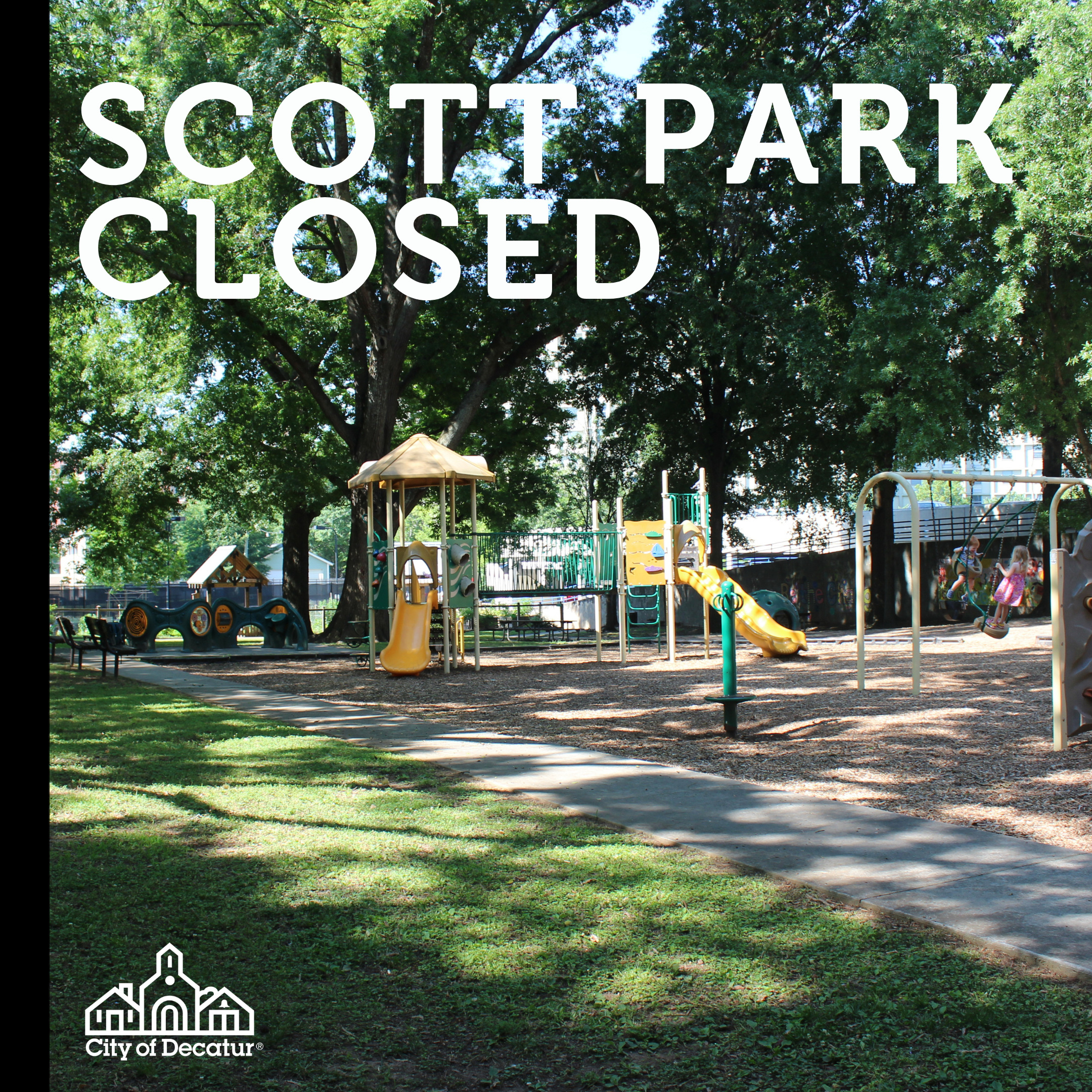
Important Park Update: Playground and Picnic Area Closure

Due to recent storm winds and a lack of significant rain, several large dead limbs have been identified hanging over the playground and picnic table areas in the park. For the safety of all visitors, we have temporarily closed the park until the necessary tree work can be completed. A tree service has been contracted and is scheduled to address the issue.

Caution tape and signage have been placed at the entrances to the affected areas. We apologize for any inconvenience and appreciate your understanding as we work to ensure the safety of our park.